From a Lenco and a Lathe
The Clear Wave didn't begin as a business plan. It began as a question: could a unipivot tonearm as good as the Naim Aro actually be made by hand, at home, by a father and son?
We still don't know exactly what an Aro sounds like. We've never heard one in person, never held one. Everything we knew about it came from forum posts, magazine measurements, and the particular way enthusiasts write about things they consider irreplaceable. That was enough. The design principles were clear: minimal bearing friction, low effective mass, a geometry that gets out of the music's way. Those became the starting point.
The First Arm
Around 2017 I bought a Lenco L75 on eBay for £75 with the idea of restoring it. At some point I decided to make a tonearm for it as well, which in hindsight was quite ambitious given my limited machining experience at the time.
The arm I had in mind was inspired by the Naim Aro. I'd never actually seen or heard one in person. Everything came from online articles and forum discussions, but the design made a lot of sense to me. A unipivot bearing, minimal friction, low mass. Simple in principle, difficult to execute properly.
My dad has been a professional engineer his whole career, working on precision components for aerospace and medical applications. That background turned out to be essential. He drew everything up properly, and we made the first arm on an old Tom Senior mill and an Axminster lathe, working weekends and learning as we went.
It wasn't perfect. But it worked, it sounded good, and it made us think that with the right equipment we could make something worth being proud of.

Original Lenco L75 restoration with DIY Aro inspired arm
The Problem with Manual Machines
That first arm also made something clear: manual machines have limits. Parts drift. Repeat accuracy is inconsistent. Two hours of setup for a ten-minute cut. For a one-off project that's acceptable. For a product that needs to be made to the same standard every time, it isn't.
My dad understood this immediately. If we were going to make something with the tolerances and surface finishes that a precision audio component demands, we needed CNC.
Building the Machine
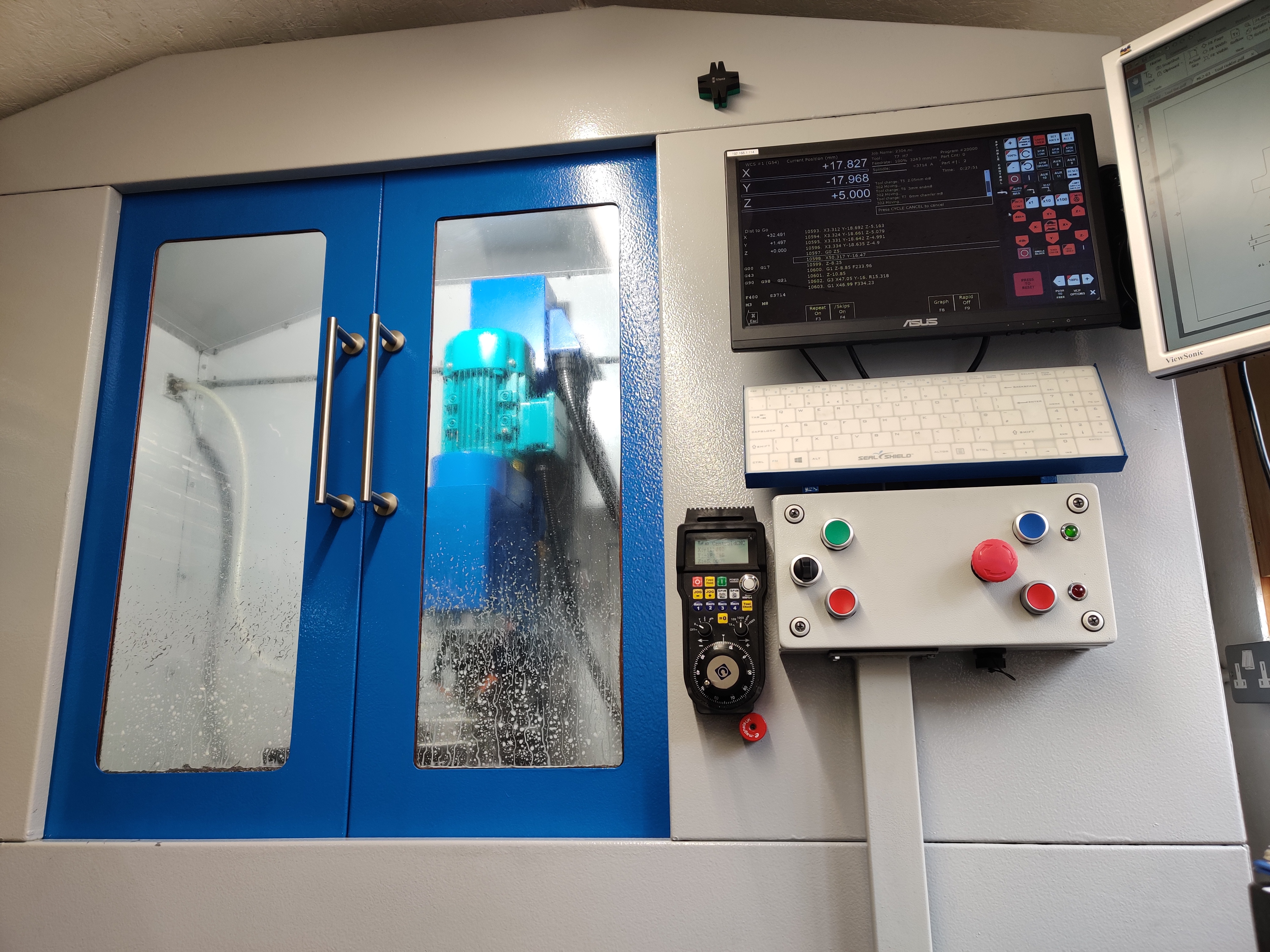
The decision to build a CNC machine rather than buy one was partly practical. The workshop is small and a purpose-converted machine could be made to fit it. But it was also just how we approach things. My dad wanted to understand every aspect of the machine that would be making the components.
We took a Warco WM16B manual milling machine and converted it. Designed the enclosure, the electronics, the control system. It took three years of weekends. The machine that exists today is substantially different from the one we started building, better understood and more capable.
It was during this period that the LP12 became the clear target. The Aro was always an LP12 arm, and making something for the LP12 meant making something for one of the most carefully considered turntable systems ever built, with a community that knows the difference between good and almost-good.

The original design concept for the CNC enclosure
Design, Iteration, and the Parts in the Bin
The Clear Wave as it exists today is a long way from the first sketches. Every sub-assembly has been revised at least once. Some parts were redesigned entirely after the first machined version revealed something the drawings hadn't anticipated. The sapphire double cup bearing, the VTA mechanism, the anti-skate geometry, the arm lift. Each one has a story involving at least one batch of parts that ended up in the bin.
My dad's approach, shaped by decades of professional engineering, was always the same: measure, understand the failure mode, then redesign. Not the fastest way to develop a product. Certainly the most reliable.
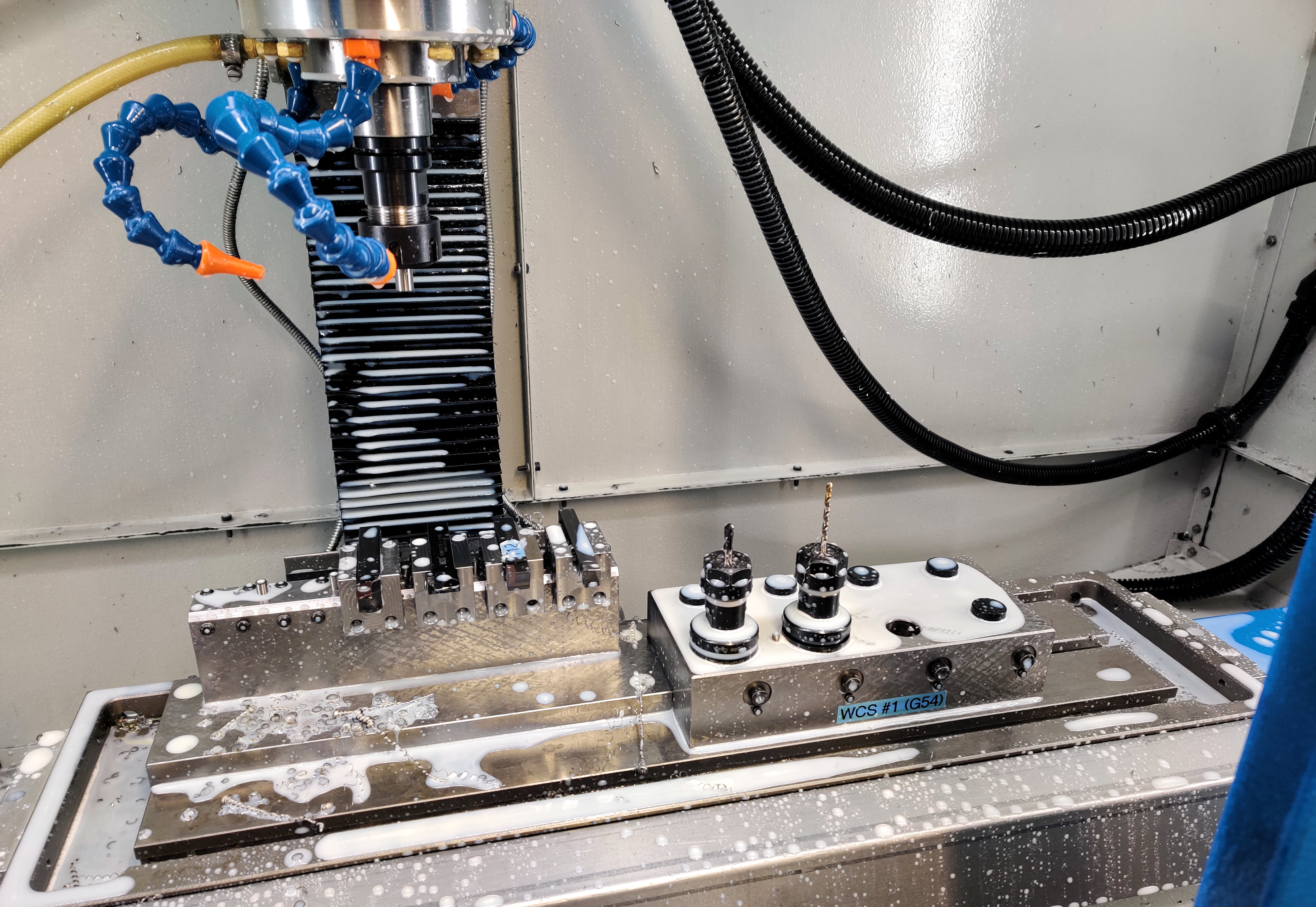
Running the machine with turning tools installed
Ready
By late 2024, after a year of near-silence, the arms were ready. Ten units machined, assembled, and nearly ready to ship.
The Clear Wave is made entirely in our small British workshop. Every part machined in-house, every arm assembled by hand. It fits the Linn LP12 on the standard armboard. The CNC machine is currently being rebuilt with a modern control system, and the next batch will follow when it's done in about 6 months.

Arm wands after being assembled in their glue fixture