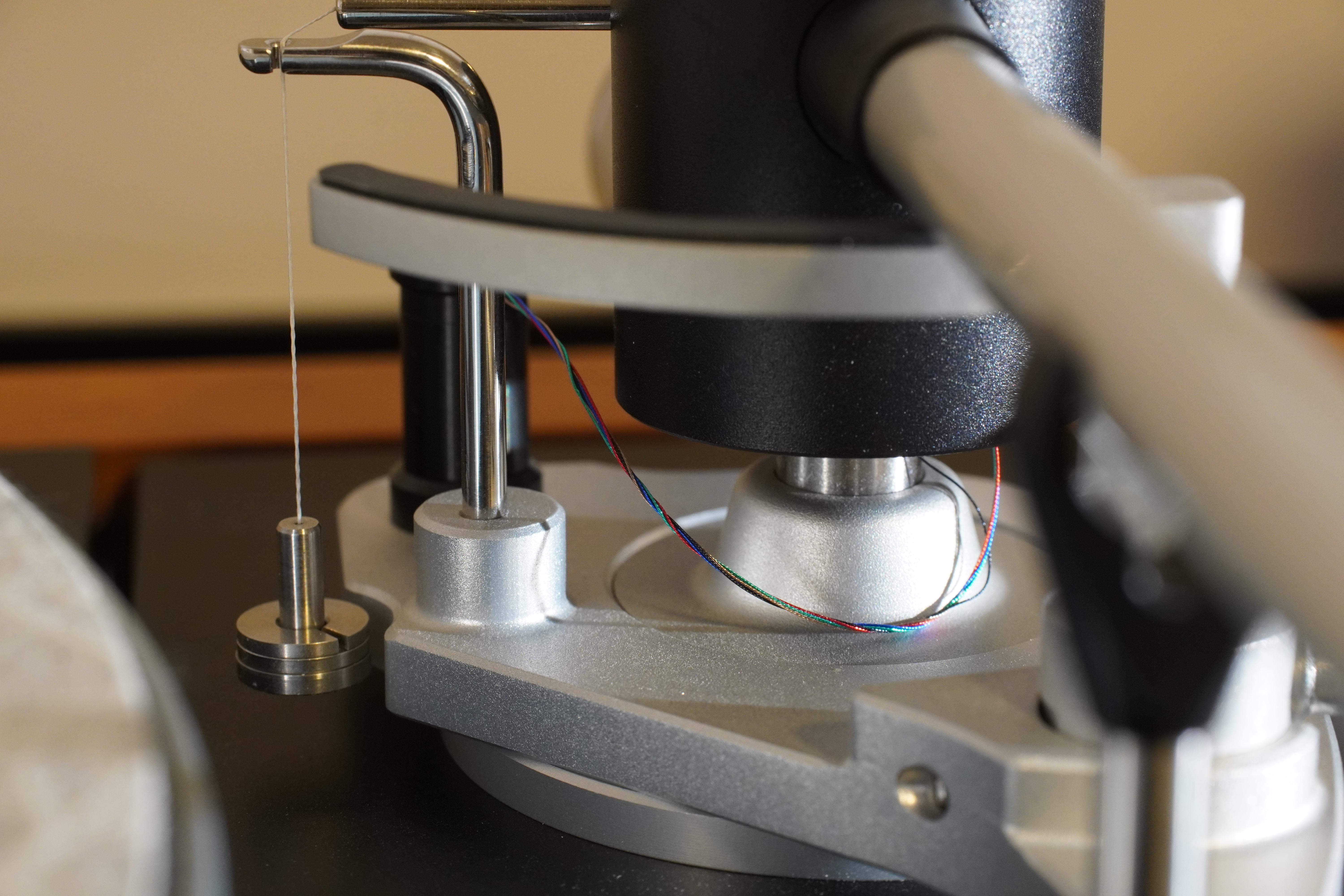
Silver-Plated Copper Litz Wire in the Clear Wave Tonearm
The internal wiring of a tonearm is one of those details that rarely gets talked about but matters more than most people realise. The signal coming from a moving coil cartridge is tiny — just a few millivolts — and everything between the stylus and the phono stage either preserves it or compromises it. This article explains what Soundlink silver-plated copper litz wire is, why it's an excellent fit for the Clear Wave unipivot, and what you're likely to hear if you choose it as an upgrade.
Soundlink Silver-Plated Copper Litz — What It Really Is
The wire is a high-purity copper litz conductor, with each individual strand silver-plated and enamel-insulated, then bundled into an extremely thin, flexible cable. The underlying litz core is Estron brand — a specialist wire originally developed for hearing aids and in-ear monitors, where microvolt-level signals and mechanical flexibility are both critical. Soundlink supplies it pre-tinned and ready to use, in 10m packs in various colours.
What this means in practice: you're working with a very small, extremely flexible conductor that is electrically excellent but physically delicate. The thin enamel insulation and fine strands can be damaged by sharp bends or rough handling — this is a precision component, not a rugged cable.
Key specs at a glance
- Conductor: high-purity copper, silver-plated on each strand
- Construction: litz, many fine strands with double enamel plus outer jacket
- Outer diameter: around 0.4mm
- Insulation: enamel-coated individual strands with a coloured outer sheath for easy identification
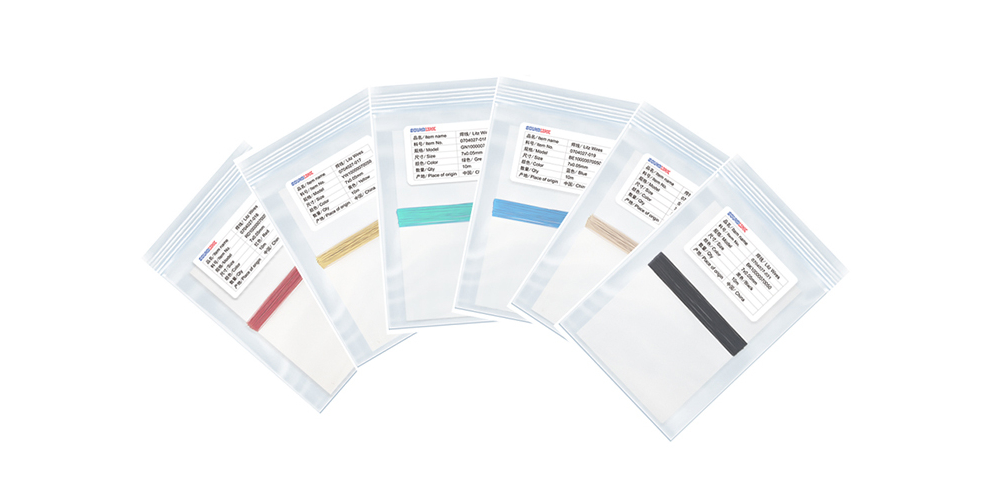
Soundlink wire on 10m wrap cards showing colour coding
Why This Wire Works So Well in a Unipivot Tonearm
Litz wire minimises the skin and proximity effects that cause high-frequency losses in conventional conductors, by using many small insulated strands rather than one solid core. Silver-plating improves surface conductivity further, reducing tiny losses that accumulate at high frequencies. Over the short run of a tonearm, the result is low resistance, low inductance, and a loom flexible enough to add virtually no restoring force to the arm's movement — which in a unipivot is exactly what's needed.
The wire is not robust, however. Gentle curves and enough slack are far more important than pulling it tight. Minimal heat when soldering protects the enamel and keeps the bundle intact. Once installed, it should be treated like the precision internal component it is.
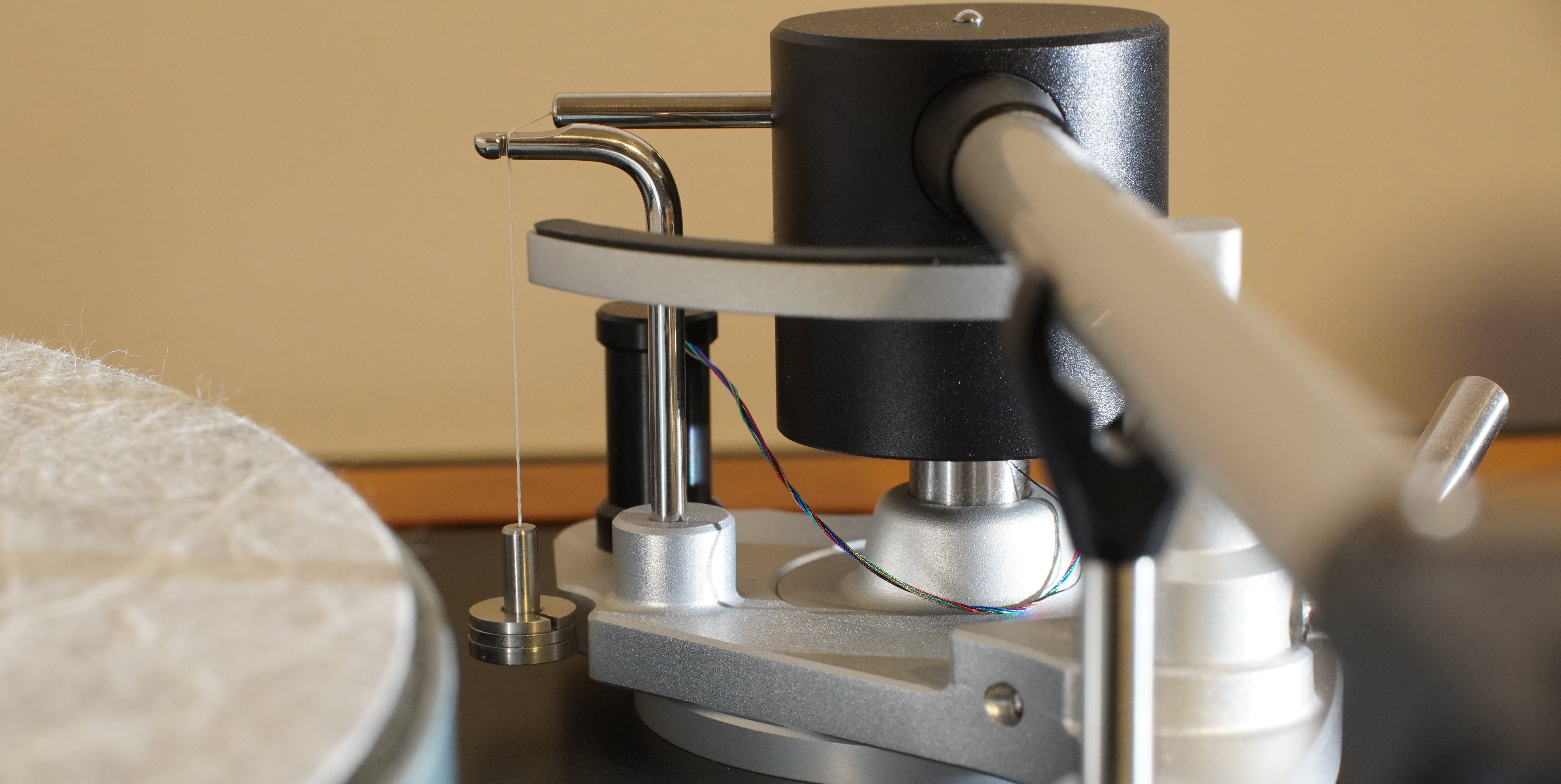
Close-up of Soundlink wire in the Clear Wave, highlighting the fine supple construction
Soundlink vs. Older Copper/Silk Litz
Many tonearms use enamelled copper litz with a silk or textile sleeve. The silk feels reassuringly robust and offers a certain mechanical damping character — some listeners describe it as slightly soft or forgiving.
The Soundlink loom offers something more controlled. Silver-plated litz with modern enamel insulation gives better surface conductivity and a tighter, more stable geometry. There's less mechanical give than a loose silk-sleeved bundle, which tends to translate into a slightly more immediate, explicit sound with better channel-to-channel consistency. The trade-off is that it's more demanding to install and less forgiving of rough handling or careless routing.

Close-up of wire highlighting the proprietary micro DIN connector
In the Clear Wave Unipivot
The Clear Wave is built around low effective mass and minimal friction at the pivot. The internal wiring is designed not to add restoring forces or stiffness that could interfere with tracking or freedom of movement. The Soundlink loom fits that philosophy perfectly — very low mass, ultra-flexible, with consistent geometry and controlled capacitance that keeps the phono stage loading and cartridge characteristics where they're supposed to be.
Key points for the Clear Wave installation
- Wires are routed with gentle curves and enough slack so the arm's movement never stretches or compresses the bundle
- Solder joints at the cartridge tags are kept short and low-heat to protect the enamel and fine strands
- The wires are enclosed in PTFE tubing at the cartridge tags, with the tags crimped onto the tubing to act as strain relief for the delicate bundle
- The loom is not meant to be worked hard — repeated sharp bends or tension will damage it over time

Close-up of the PTFE tubing reinforcing the delicate wires at the headshell
What You're Likely to Hear
Upgrading from the standard silk litz to the Soundlink loom typically brings a lower noise floor — less hum, hiss, and crackle, especially in more revealing systems. Micro-detail and spatial information become more apparent, with a greater sense of space around instruments rather than just on them. Bass tends to feel tighter and more articulate. The overall character is slightly more immediate and open compared to older silk-damped designs.
These improvements only materialise if the wire is installed with care. Poor routing or rough handling can introduce micro-crackle, noise, or intermittent drops in output — which will quickly overshadow any sonic benefit.
A Few Words of Caution
The Clear Wave is a robust tonearm. The internal wiring is not. If you're installing or re-routing the Soundlink loom, use gentle curves and plenty of slack, avoid sharp bends or pinching near the pivot or tube walls, and keep soldering heat low throughout. Done carefully, the Soundlink loom is a genuine upgrade — a low-resistance, flexible, precision-engineered path from cartridge to phono stage that supports everything the Clear Wave is designed to do.
Availability
The Clear Wave is available from Cymbiosis Audio in Leicestershire, who hold demo units for performance comparison. Contact them at enquiries@cymbiosis.com.
The Soundlink wire upgrade is not fitted as standard due to its delicate nature, but is available as an option. The current limited production run ships with the standard silk-insulated litz wire fitted.